




 中东所简介
中东所简介Academic Exchange
【 Lecture Summary 】 Zhao Kejin | The Way of Neutrality in the Mutual Learning of World Civilizations
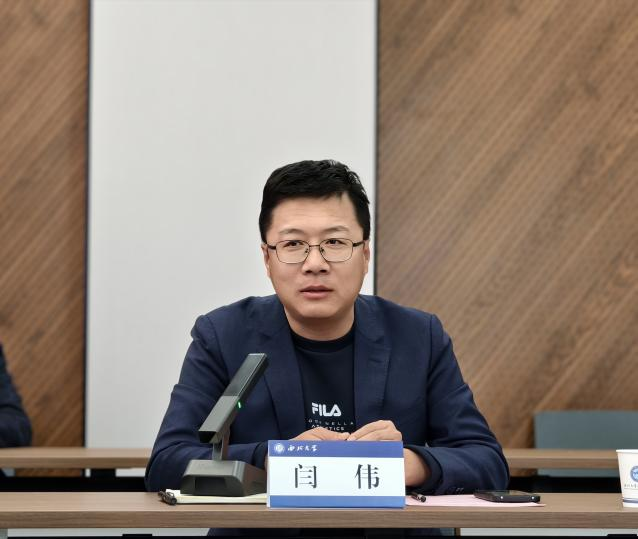
On the afternoon of November 27, 2025, Professor Zhao Kejin, Dean of the School of Social Sciences at Tsinghua University, was invited to give an academic lecture titled "The Way of Neutrality in the Mutual Learning of World Civilizations" at the Talent Cultivation and Intelligence Lecture Hall of the Regional School of Nations at Northwest University. The lecture was chaired by Professor Yan Wei, Vice Dean of the Regional School of Nations.
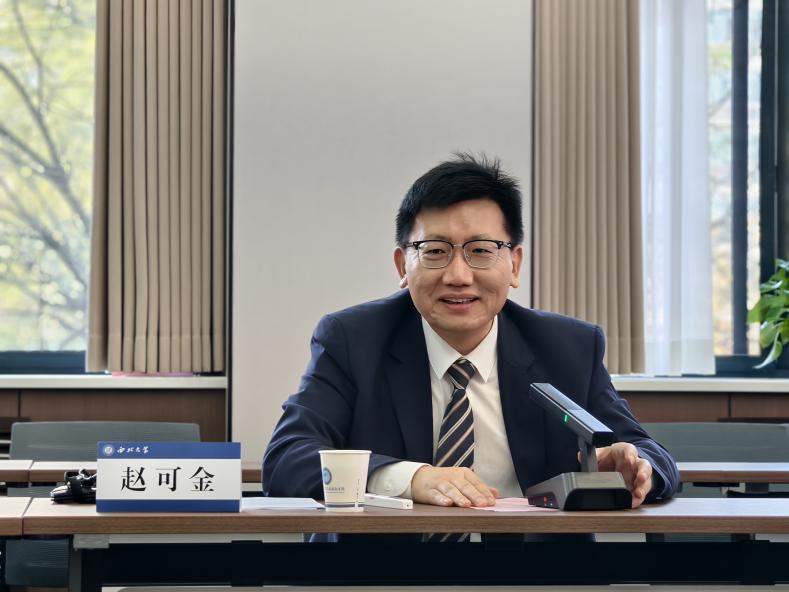
Professor Zhao Kejin first introduced the connotation and cultural foundation of the "Way of Neutrality", and then explored its value and application in the transformation of world order, mutual learning of civilizations, and Chinese practice from four aspects with the "Philosophy of Neutrality" as the core. Professor Zhao believes that the current world order is transitioning from 1.0 (ethical order), 2.0 (imperial order), 3.0 (national order) to 4.0 (global order), requiring a balance between authority and market rules, emerging and established powers, and other relationships; China's governance has gone through revolutionary struggle, class struggle, economic construction, and national rejuvenation, always adhering to the principle of neutrality and maintaining a consistent stance. However, there are differences between China and the United States in religious, cultural, political, and economic dimensions, and conflicts need to be resolved through the path of neutrality; Zhonghe philosophy has a wise origin that integrates diverse beliefs, philosophy, and economic theory. It takes the cultural genes of "upholding the center and upholding righteousness" and "seeking common ground while reserving differences" as "harmony", and innovatively proposes the "Zhonghe co-development theory" that covers the domestic "five hands" and international "three forces" and is centered on the complementarity of yin and yang and the creation of all things. At the level of mutual learning among civilizations, guided by the global civilization initiative with the "Four Common Advocates" as its core, we adhere to the new civilization concept of equality and mutual learning among civilizations, advocate for the common values of all mankind at the world, national, and individual levels, and aim to build a new form of civilization that integrates the Chinese nation community, the community of human destiny, and the community of human and natural life. China has also organized governance and exchange activities such as high-level dialogues between political parties and the Asian Civilization Dialogue Conference, carried out more than 30 cultural and tourism year activities, and established about 3000 pairs of friendly cities. It has deepened cooperation with the United Nations, promoted the development of the BRICS mechanism, and advanced international cooperation in education, science and technology, health and other fields, transforming relevant concepts into practical actions. Finally, Professor Zhao proposed that the Way of Neutrality is the core wisdom of Chinese civilization and a key path to respond to global changes and promote mutual learning among civilizations. In the future, China will continue to take root in the fertile soil of Chinese civilization, guided by the new civilization concept, deepen cultural exchanges between China and foreign countries, enrich new forms of human civilization, and contribute Chinese strength to building a better world. During the interactive session, Professor Zhao Kejin provided detailed answers to the questions raised by the teachers and students present. Professor Yan Wei summarized the lecture.